Tearing
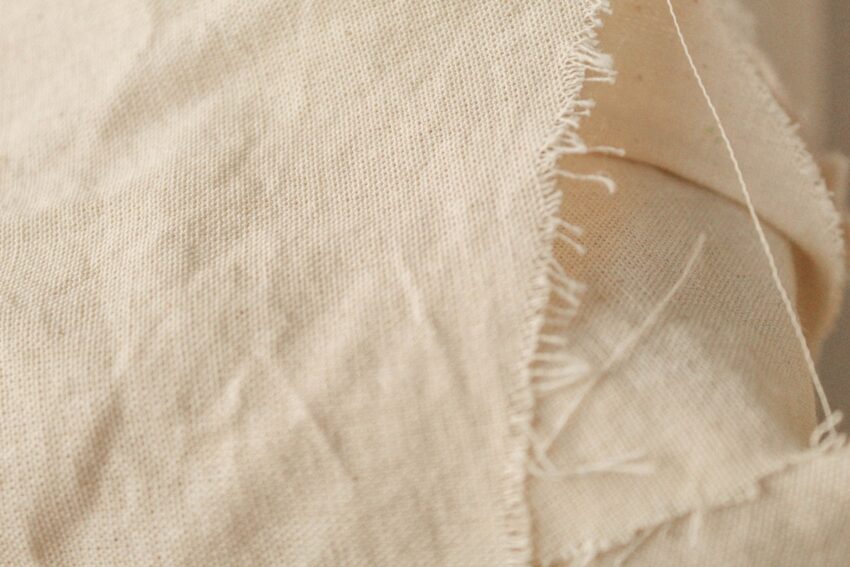
The unexpected tearing of fabric violated my ears and shook my insides.
I was at a quilt shop in a Denver suburb of an internationally award-winning quilter who had a big impact on my own quilting journey. When the woman who measured my fabric saw my face she said, “We rip the fabric instead of cut it because the tearing provides a squared up line.”
When torn, cotton material will split right between two threads that span the short width between the salvage edges – easily tearing all the lengthwise threads. I have since ripped many of my own fabrics when I need them to be square.
During my morning devotion time today, I realized there was a reason why certain fabrics were torn in the Bible while others were not. I grew up making things out of fabric – be it clothing, placemats, wedding gowns, or quilts. So my interest is always sparked when I read about this textile in Scripture. The meaning of the word “tear” means to divide with violence. Hearing my expensive fabric being torn was certainly a jolt.
I realized that there was a clear dividing line (pun intended!) of what fabrics were kept in tact in the Bible and those that were torn. Let’s take a look.
The linen tunic worn by the Levitical high priest was not to be torn (see Ex 39:22, Lv 10:6). This statute was upheld until Caiaphas, the high priest who crucified Jesus, tore the tunic he was wearing (see Mt 26:65). Right when Jesus died on the cross the veil of the Holy of Holies that was also made of linen (see side note below), was torn from top to bottom (see Mt 27:51).
The seamless linen tunic of Jesus was not torn. A seamless tunic was very rare and valuable which is why the soldiers didn’t tear apart Jesus’ garment. (See Mt 27:51 and Jn 19:23-24.)
Please notice that the fabric of the Old Covenant was torn while the New Covenant material was kept intact. Jesus told a parable about these two different fabrics: “No one tears a piece of cloth from a new garment and puts it on an old garment; otherwise he will both tear the new, and the piece from the new will not match the old” (Lk 5:36). Consider that the new garment is that of the New Covenant and the old garment is of the Law of Moses.
The holiest of all garments in the Old Testament was the tunic worn by the high priest. The Law of Moses forbade tearing it. However, when this beautiful garment was torn the priesthood no longer belonged to the tribe of Levi. The duty of the high priest was transferred to the tribe of Judah when the Roman soldiers unknowingly acknowledged the priesthood of Jesus.
______________
Side note – The veil in the temple was not made of thick material:
Make a curtain of blue, purple and scarlet yarn and finely twisted linen, with cherubim woven into it by a skilled worker. Hang it with gold hooks on four posts of acacia wood overlaid with gold and standing on four silver bases. Hang the curtain from the clasps and place the ark of the covenant law behind the curtain. The curtain will separate the Holy Place from the Most Holy Place. Ex 26:31-34 NASB
The word for yarn is added – it is not in the original manuscript. The KJV correctly says blue, and purple, and scarlet, and fine twined linen.
This is actually what started this entire post. When I saw the word “yarn” in my morning reading, I suspected it wasn’t the correct translation. I’m also a knitter and the yarns I use are most usually wool so I naturally assumed the implied yarn was intended to be wool. However, wool and linen were not to be woven together to make fabric (Dt 22:11). So I suspected the verse should be rendered blue, purple and scarlet dye and finely twisted linen since it was the linen that would be woven.


Leave a Reply